A new era for place-based philanthropy: What ‘Our Place to Give’ means for communities

The UK government has set out an ambitious new vision for the future of philanthropy with the publication of Our Place to Give — a national plan designed to grow place-based giving across England.
At its heart is a simple but powerful idea: philanthropy should be better connected to the communities that need it most. This vision is based on three main pillars.
PILLAR ONE — Connecting philanthropy with place
Something we’ve long believed is now at the heart of government policy: where you live shouldn’t determine whether your community benefits from philanthropy.
The government’s newly published Our Place to Give plan puts place-based giving front and centre — and for those of us rooted in our communities, it feels like an important moment.
The numbers tell a clear story. London receives more than a third of funding from the UK’s largest philanthropic foundations. Communities elsewhere — just as full of talent, ambition and need — have too often been overlooked.
Pillar One of the plan responds to this directly. A new Community of Practice will bring together place-based giving initiatives across England to share knowledge, build skills and map where philanthropic funding is flowing — and where it isn’t. And a “think philanthropy” approach will be woven into major government programmes, so that philanthropy is seen as a genuine partner from the start, not an afterthought.
Community foundations like ours exist precisely to be that trusted bridge — between people who want to give and the communities that will feel the difference. We’re proud to be part of a growing movement that puts place at the heart of giving.
PILLAR TWO — Establishing better philanthropic partnerships
The best things happen when people work together. That’s something we see every day in our work — and it’s at the heart of Pillar Two of the government’s new Our Place to Give plan.
For too long, philanthropy and government have operated in parallel rather than in partnership. This plan sets out to change that: through regional philanthropy ambassadors who will share insight and broker connections, and a single, joined-up route into government for philanthropists through the new Office for the Impact Economy.
The examples in the plan bring this to life. One foundation’s long-term commitment to a community in Birkenhead didn’t just close a 15-month reading age gap — it inspired the same model to roll out across six communities in the Liverpool City Region. That’s what happens when philanthropy and public investment pull in the same direction.
Community foundations sit right at the heart of this kind of partnership — trusted by donors, rooted in place, and connected to the organisations doing the real work on the ground. We see enormous potential in what this plan is pointing towards.
If you’re a philanthropistSomeone who donates time, money, experience, skills or talent. thinking about how to make your giving go further, or an organisation looking to build new partnerships — we’d love to have that conversation.
PILLAR THREE — Unlocking further philanthropic investment
Imagine if just a small shift in giving habits could unlock £12 billion more for communities across the UK every year.
That’s not a dream — it’s the arithmetic behind Pillar Three of the government’s Our Place to Give plan. Right now, high-net-worth individuals give an average of 0.4% of their investible assets. If that rose to just 1%, the difference would be transformational.
Two things stand in the way — and the plan tackles both.
The first is advice. 81% of wealthy donors say they want to talk about philanthropy with their financial advisers. Only a third have ever been invited to. A new joint working group will look at how the financial services sector can do better — opening up conversations that could change communities.
The second is culture. The UK tends to be quiet about giving. But research shows that when people hear about the impact of someone else’s generosity, 34% feel inspired to give themselves. The plan commits to celebrating philanthropists — through regional ambassadors, the Honours system, and embedding giving into public life.
Stories matter. And we have so many of them — of donors who started small and grew their giving, of communities transformed by people who simply cared about where they lived.
You can full the full Our Place to Give here: https://www.gov.uk/government/publications/our-place-to-give-a-plan-for-growing-place-based-philanthropy
Read UKCF’s report here.
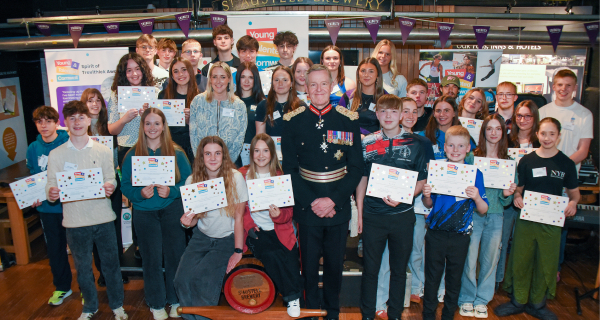
Pictured: CCF Trustees at Trelya, a group funded by CCF.